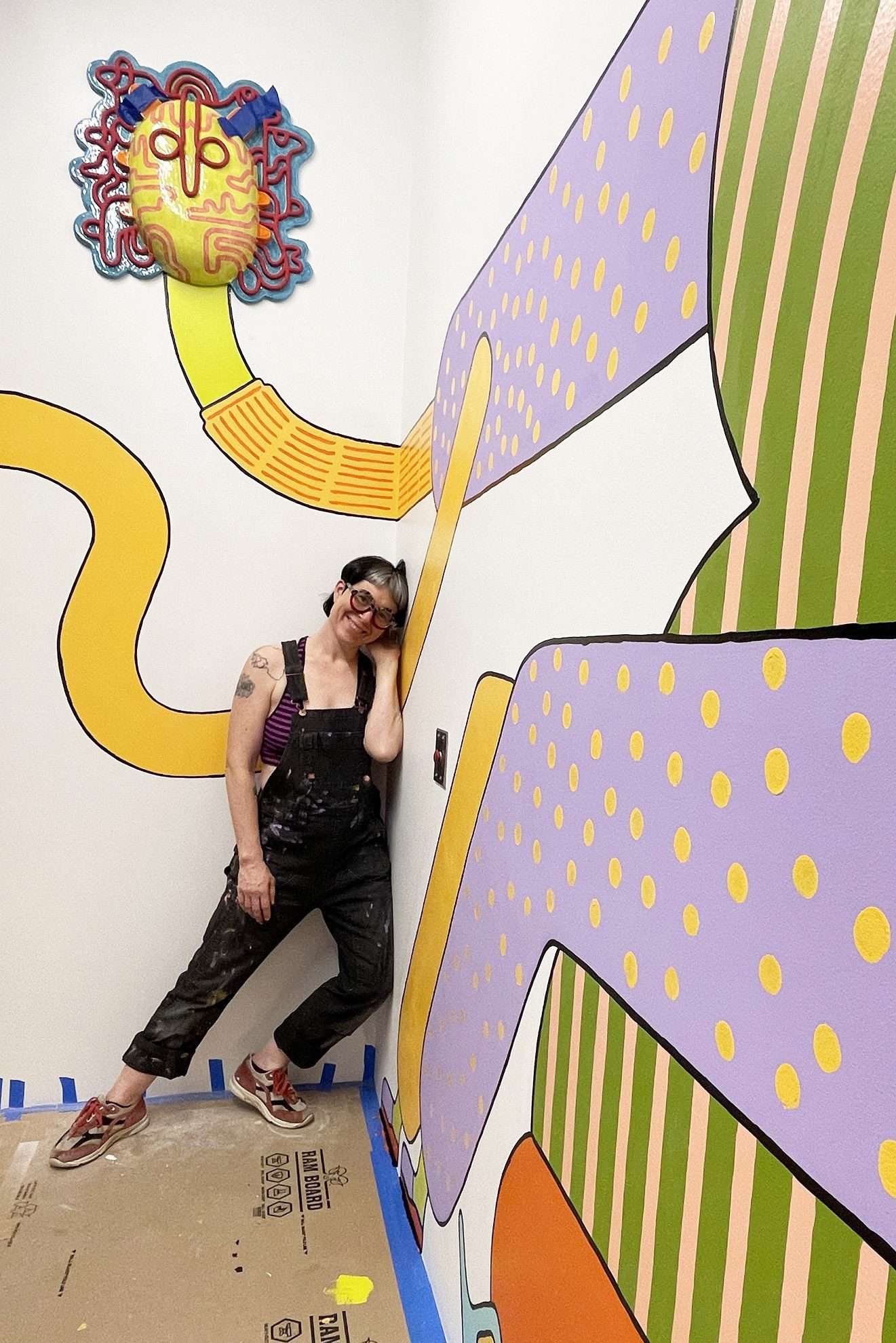
 Roy Franklin with their work "All of It"
 We spoke with artist Roy Franklin about their background and the process behind the new Symphony Block Bike Corrals. Read on to learn more!
Roy Franklin is a professional amateur, working across countless mediums—from ceramics and comics, to public art and social practice. Their work lingers on the hidden and overlooked, inviting a more expansive sense of the world beyond immediate perception. Through playful inquiry, Roy engages connection, empathy, and curiosity as essential ingredients in the ongoing practice of liberation.
What is your background in the arts? Tell us more about your practice and connection to the art community in Seattle.
My art practice is all over the place, but I swear it makes sense. I’m currently working on a novel, public art, animation, ceramics, and comics. The medium is usually just a choice I make about the best way to convey an idea. I have a sprawling range of interests that always intersect around the idea of connection.
I’ve been in Seattle since 1998, when it was fairly easy to live here as an artist. I started organizing community and arts events around that time, and as Seattle got unfathomably expensive, it felt increasingly critical to create opportunities for artists and the public. One of my biggest contributions to Seattle’s art scene was co-founding Short Run Comix Festival. I’m currently collaborating with some buds on a project called Speculative Practice: Inciting Liberatory Futures, which uses participatory storytelling to train our brains and bodies to co-create more collective visions of the future.
What was your inspiration behind the design of the Symphony Block Bike Corrals?
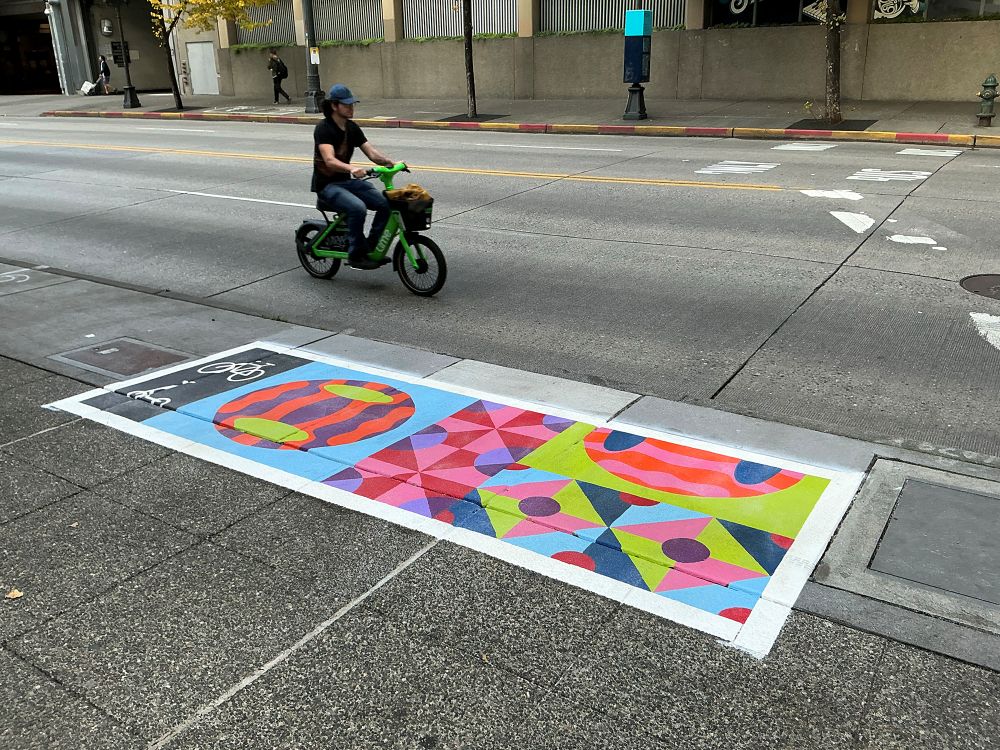
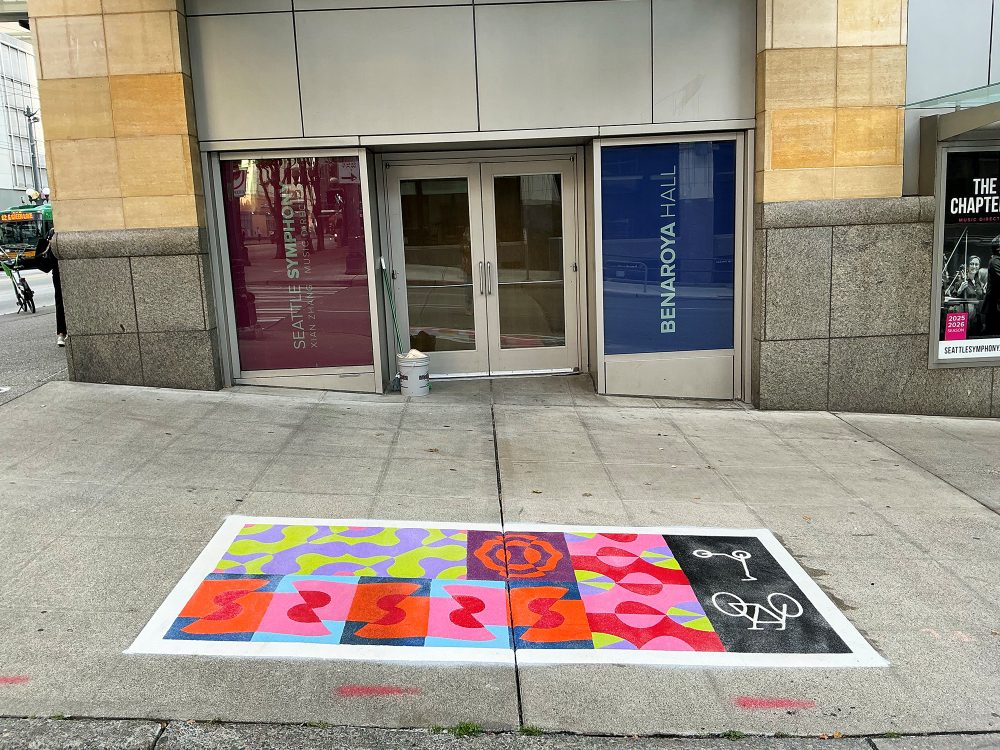
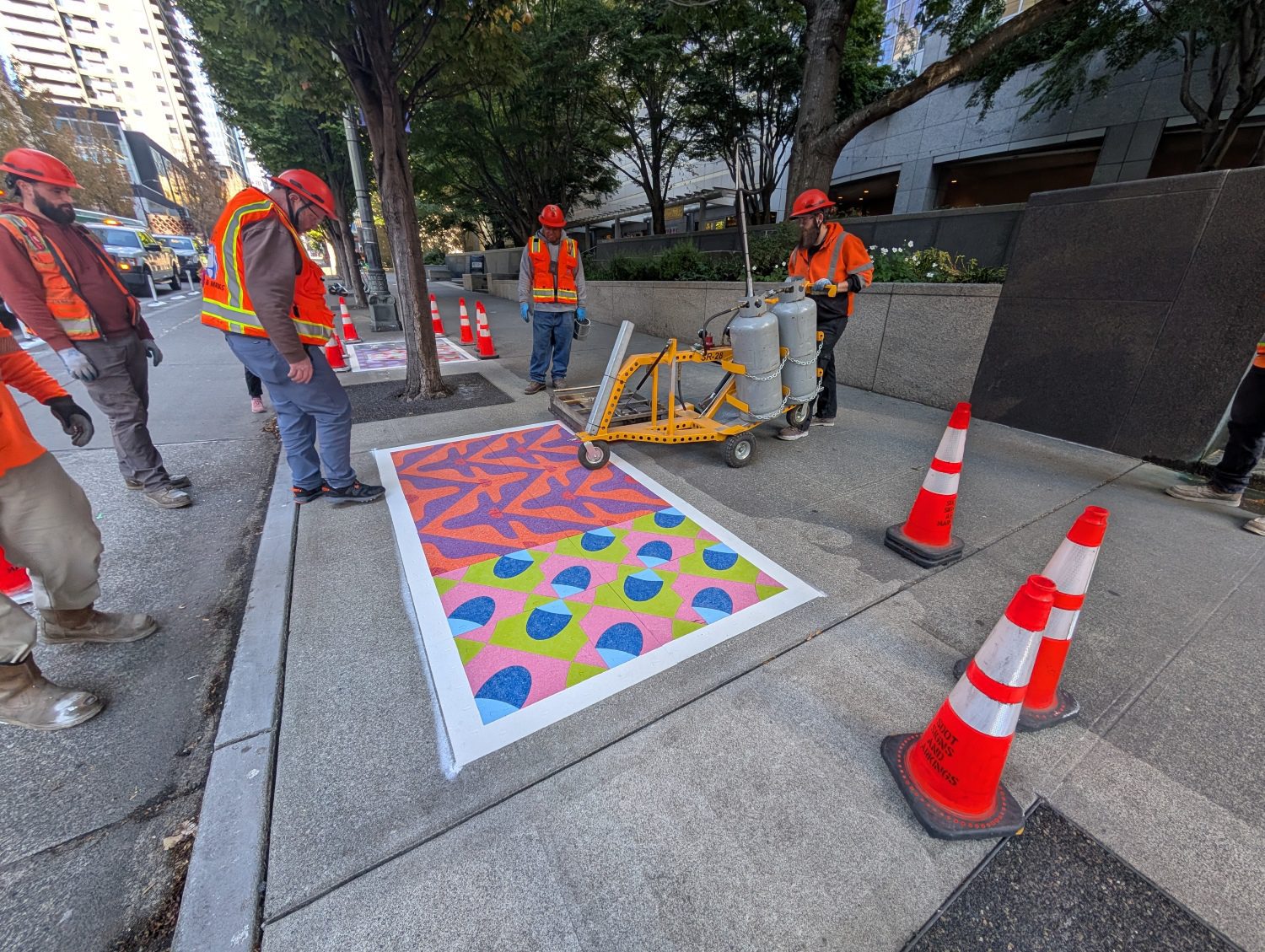
Since these bike corrals are located outside Benaroya Hall, I knew there would be a connection to sound. I drew upon cymatics, the study of the visual effects of sound. We tend to think of our senses as separate forms of perception, so sound gets defined as an auditory experience. But we can feel and see sound as it impacts our bodies and the environment. The designs are based on real-world examples of frequencies interacting with malleable substances like water and sand.
This work is an invitation to consider the multi-sensory nature of perception and question what we think of as limitations to experience. This kind of expansive thinking is critical to noticing the way our world is shaped by how we talk about it. Thinking about sound as a visual experience may shift how we consider disability, anthropocentric ideas about communication, and what other parts of human experience we are overlooking. It’s all about encouraging curiosity and empathy.
How was the community involved or taken into consideration in your process?
The incredible local artist, Moses Sun, created the community input session. People consistently wanted the artwork to disrupt the monotony of downtown with color and to have a connection to nature and music. The site and community input led me to think about sound as a natural phenomenon. It’s fascinating how the shapes that sound makes mimic other natural structures–flowers, waves, snowflakes, and crystals. That universality was a catalyst for considering how we experience the world.
Does the process of creating public work differ from your usual studio practice?
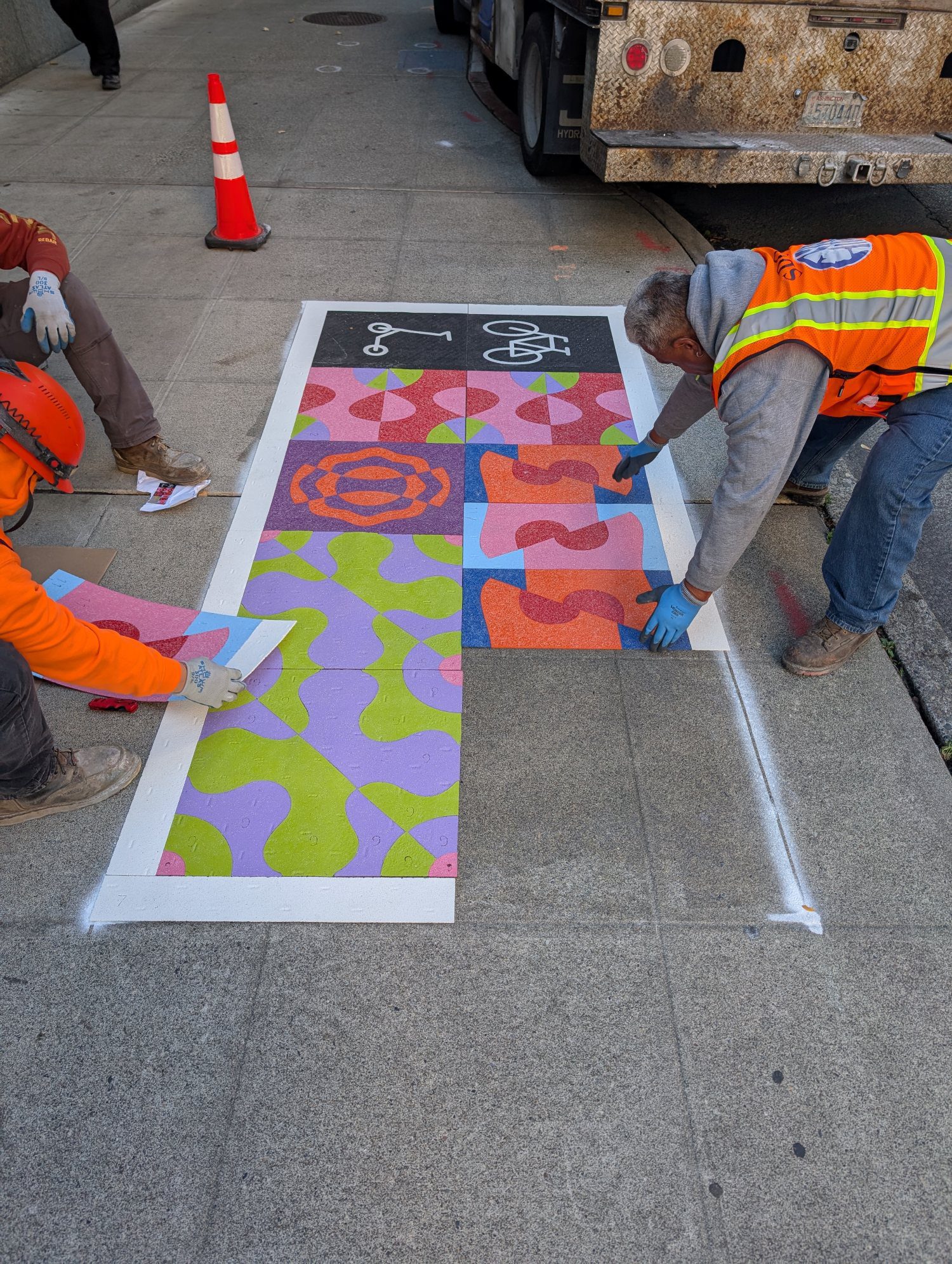
The two realms of studio work and public work used to feel more distinct to me. I used to think of them as an individual practice and a collective one, but that doesn’t feel accurate to me anymore. My interest in doing community-based work is increasingly influencing my personal projects. But I definitely get to do more experimentation and material study in the studio where the stakes are low.
What do you hope residents and visitors interacting with your work will experience?
I am most interested in how my work contributes to the public’s experience of their environment. The immediate impact is to break up the monotony of the grey and create colorful beacons that encourage people to park their bikes and scooters so that they don’t block sidewalk access. But of course, I hope people connect to the layers of meaning–that the concept supports curiosity about our shared experiences and looking beyond our initial perceptions of the world.

The Symphony Block temporary public art installations are in partnership with Seattle Department of Transportation, Seattle Symphony, Benaroya Hall, King County Metro, Sound Transit, Downtown Seattle Association, Unico Property Management, and the University of Washington.