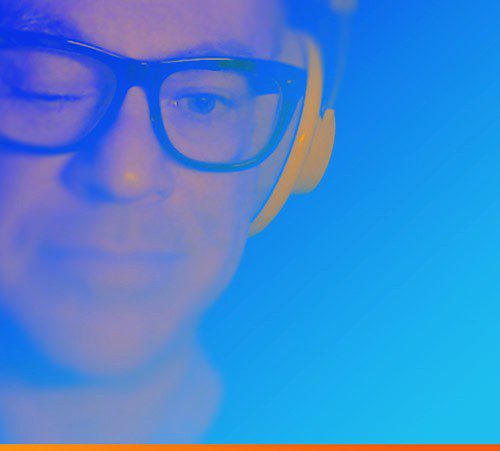
What happens when you blend documentary filmmaking, electronic music, and intimate artist vignettes into a single immersive experience? For Seattle-based music producer, storyteller, filmmaker, and CityArtist Grantee Jeff Leisawitz, the answer is Docutronica—a multidisciplinary project that transforms traditional artist interviews into rich, emotionally resonant short films.
Rather than simply documenting an artist’s work, Docutronica invites viewers to experience it through layered soundtracks, visual storytelling, and thoughtful narration. Whether profiling painters, sculptors, or other visual creators, Leisawitz’s goal is to capture the emotional essence of their process, not just the output. In this conversation, Leisawitz shares the inspiration behind the project, the impact of public funding, and what it means to build new creative pathways for both artists and audiences in Seattle’s evolving arts ecosystem.

What was the inspiration for Docutronica? How did you arrive at the idea of combining storytelling, custom soundtracks, and visual work in this way?
What the heck is Docutronica? I’m still trying to figure it out. Well, I consider it a brand-new kind of media remix. These are documentary music videos. These films are artist profiles with a heartbeat.
This whole thing actually came to me twenty-five years ago when I was running around Seattle trying to be a rock star. I realized that all of the songs I was writing were from my own perspective. Cool enough. Except I wanted to tell other stories. Bigger stories. Different stories.
As a music producer, storyteller and filmmaker, I’ve always been fascinated by the ways that music and images reveal things that cannot be expressed by words alone. So, I went out into the world and interviewed people with vastly different experiences. I wanted to find the common threads of empathy and humanity.
I recorded interviews with a blind man, a heroin addict, a Buddhist mystic, a woman who had a near death experience and went through the tunnel of light. Then I cut sound bytes from these recordings into my original electronic music. The lyrics were the words of the people I interviewed. Immediately this album won the title “Best Independent Electronic Artist in the World.’ Wow!
These days I focus my interviews on all kinds of artists, creatives, and photographers. I want to learn from everyone. To listen. To wonder. And amplify their perspectives and visions.
How do you select the artists you feature? What draws you to a particular artist’s work, process, or voice?
I’m drawn to artists who create from the inside out. People who dig deep, take risks, and transform their pain, joy, and/or curiosity into something. When I meet an artist, I’m listening for their connection to their truth. Their authenticity.
Whether it’s Juliette Aristides, a classical realist painter and founder of Gage Academy’s Classical Atelier, or Dez’Mon Omega Fair, an abstract painter/ poet and installation artist tapping into healing through color and light, I want to capture and amplify that energy. The energy behind the art.
Every artist and every person has something to teach us about what it means to be human. Even if none of us really has it figured out. That’s what excites me about Docutronica.
What kind of experience do you hope people take away from Docutronica? How do you want them to feel, to think, or to connect differently with the art and artists after seeing it?
I want audiences to reconnect with their own beauty and truth, with their own expression, with their true emotions. I want to help build community. Foster empathy. Inspire people to connect with themselves on a deeper level. Because at its best, art is a way for us to be seen, expressed, healed and connected.

How do you ensure authenticity for both the artist’s voice and your own creative vision without overshadowing the artist?
Authenticity is everything. When I interview an artist, it’s a sacred space. My job isn’t to interpret or alter their truth. It’s my job to reveal it sonically and visually.
As a filmmaker and music producer, I see myself as an amplifier, not a filter. Yes, these are my soundtracks, my visuals. But they’re designed to resonate with the artist’s essence. It’s a creative collaboration.
What did receiving the CityArtist Grant mean to you and to Docutronica?
Receiving this grant from the Seattle Office of Arts & Culture was a powerful validation. Not just for me, but for the concept of Docutronica itself. It reminded me that this city believes in experimentation. That Seattle values artists who are bridging mediums and reimagining how stories can be told. This is truly the spirit of our great city.
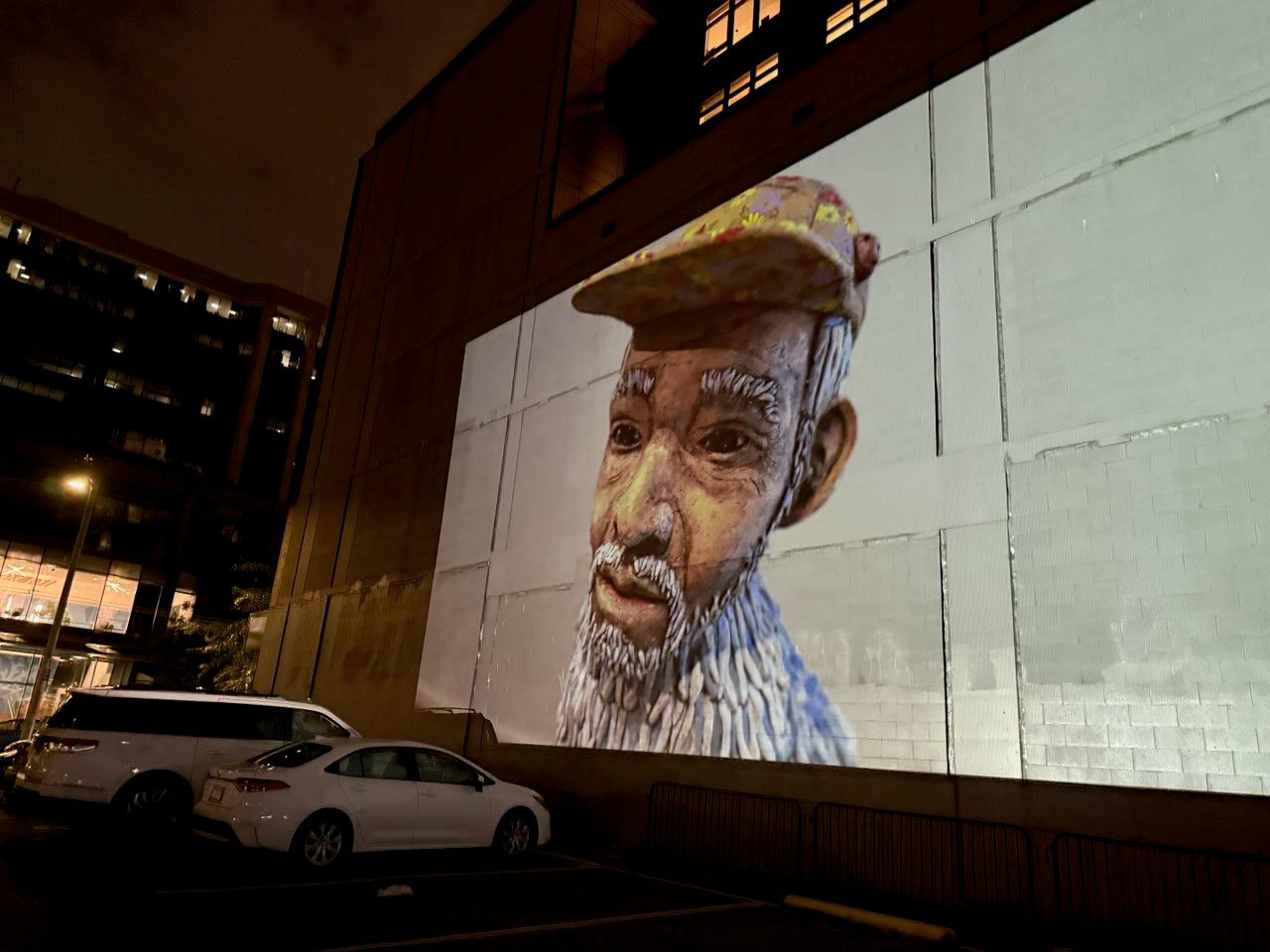
This grant changed everything for me. It gave me resources to bring Docutronica out of the studio and into public spaces. With sponsorship help from The Bakeree, and promo support from the Belltown Art Walk, we projected these videos onto a five-story wall in Belltown during art walk a few weeks ago. We shined some Docutronica at Gray Sky Gallery in Pioneer. And there’s way more to come. I LOVE this! Thank you, Seattle!
Looking back now, what are you most proud of in Docutronica so far?
These are tough times. But I’m a firm believer that art and music and stories can literally save the world. They call me a dreamer, but I’m not the only one.
I’m proud that people really get it. We all connect to art, music, words and images in different ways. I’ve had people come up after screenings with tears in their eyes, saying they finally understood what it means to be an artist and/ or a human trying to get through this life with connection, joy, awe and curiosity. I’m also really proud of the community that’s forming around this. Art fans, painters, sculptors, gallerists, photographers, collectors. Everyone seems to be connecting through these very real human stories and perspectives.
Docutronica started as an experiment twenty-five years ago. It’s becoming a movement. So freaking cool.

classical realist painter
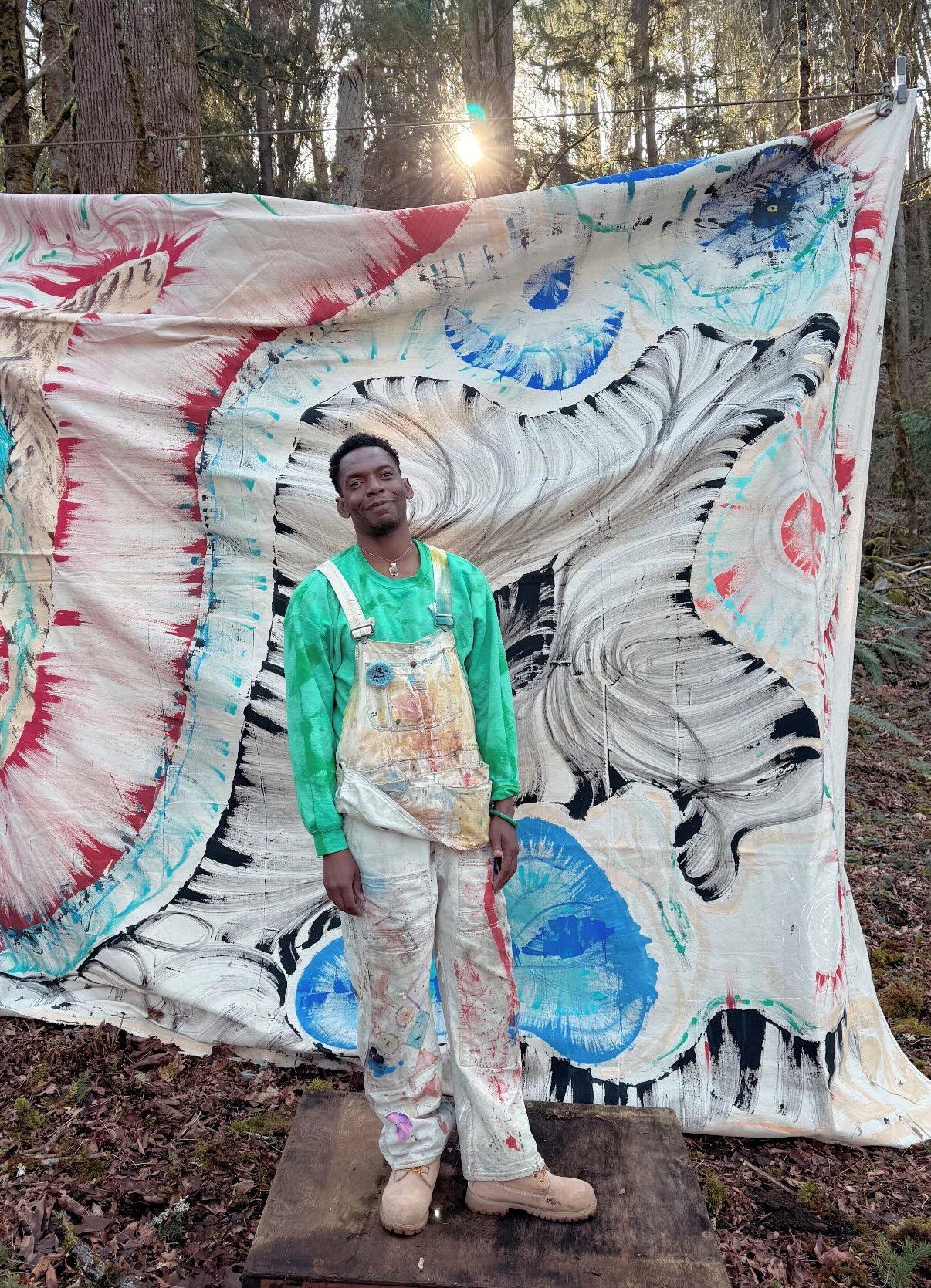
large scale abstact painter
How do you see Docutronica growing or evolving in Seattle’s arts ecosystem? What role do you hope it plays?
I see Docutronica as connective tissue in Seattle’s art scene. A way to unify our incredible diversity of voices and disciplines. A way to bring us all together through story, sound, and shared experience.
My hope is that it becomes a platform where artists are truly seen. Not just for their finished work, but in their vulnerability, their process, their courage and their ‘why’. I also hope these videos and events inspire everyone who sees them to feel deeply, express fully and live their lives with an artist’s heart.
I’d love to expand Docutronica into galleries, museums, and outdoor spaces. To work with non-profits and corporations and organizations to bring real authenticity and connections to their communities. I want to get the word out with partners and sponsors and collaborations.
I truly and deeply hope that Docutronica lights up the people of Seattle. And the world.
From First Thursday gallery screenings to projecting your work onto buildings for Belltown ArtWalk, you’ve already woven Docutronica into the arts scene in Seattle. Are there any upcoming events where people can experience your work?
Yes! The next Docutronica screening event is coming up on November 15th at Northwest Film Forum. This is gonna be very very cool!
We’ll be screening the films. Then I’ll be interviewing the featured artists live, with a Q&A from the audience. Then we’ll have a creative community-building afterparty. Very fun!
I’d love for everyone to join us—artists, art lovers, gallerists, and collectors. Not just to watch, but to participate. To see what happens when story, music, and community collide in real time.