 Photo by Sherwin Eng/Jack Straw Cultural Center
 Written by Leah Mann
“Shikata ga nai” (し か た が な い), translates to “it is what it is.” It’s a Japanese phrase that encourages acceptance of a situation, even if it’s difficult or undesirable, and finding peace within it. It’s an opportunity to pivot and prioritize what you do want.
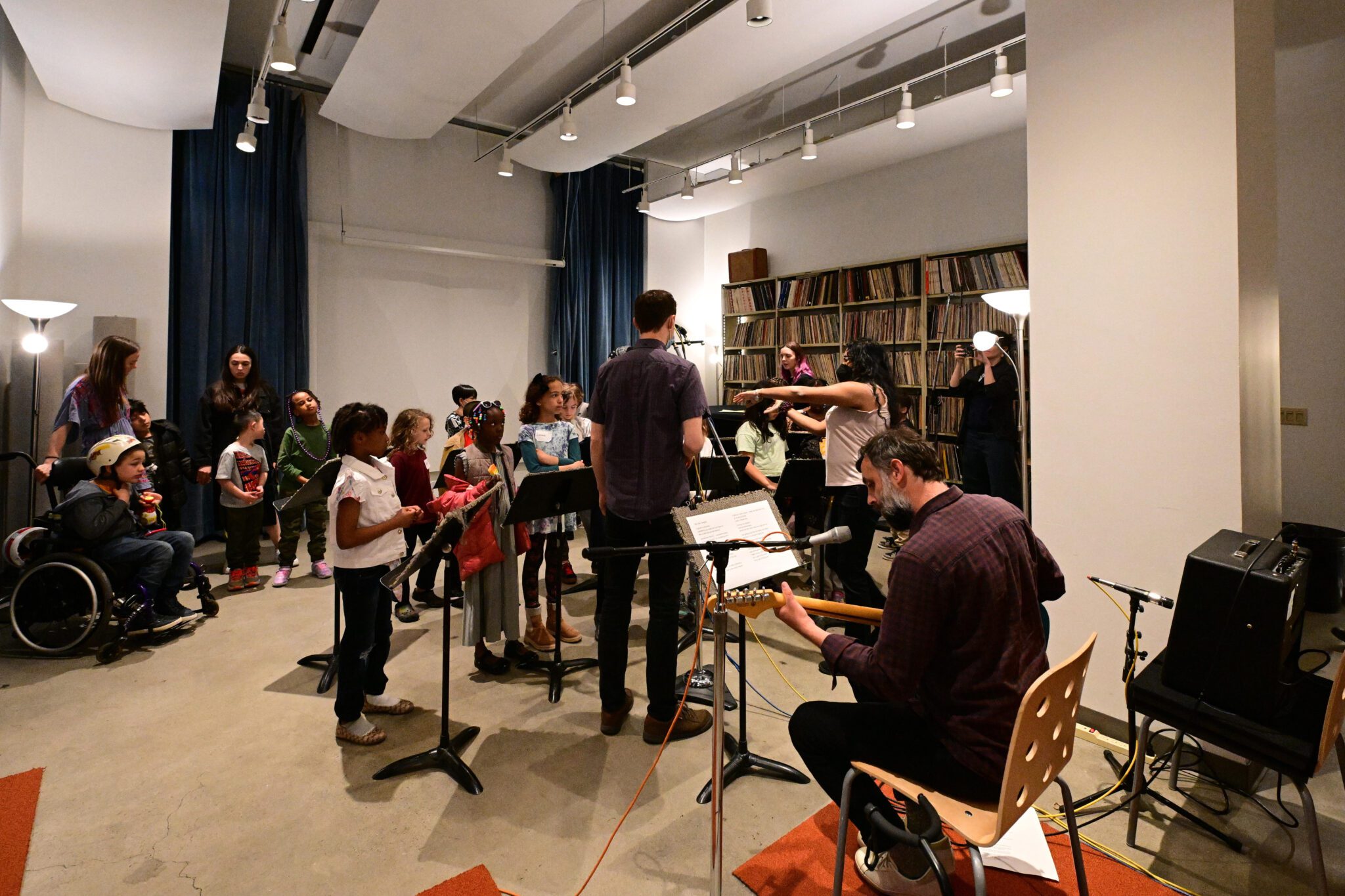
In the midst of an Executive Order to dismantle the Department of Education, affecting 7.5 million students disabilities and special education needs (15% of all public school students), I head over to the first day of a movement and music arts residency at Lowell Elementary School. Provided by Jack Straw Cultural Center, the residency works with K-3rd graders who are in the Distinct Program for students who need specialized instruction and significantly different curriculum from general education classes, as well as students in the ASPIRE program for medically fragile students. I felt more equipped than usual after The Creative Advantage Visual Arts Professional Development Day at the Seattle Asian Art Museum, which focused on special needs students.
This was a response in my first class: “This maraca Stop & Go game with adaptive communication devices BITES!” Well, at least for this student, at this moment. Shikataganai! That happened. Pause. Feel. Breath. “Oh my! I am sad and shocked, but more so I am so glad you did not break your teeth! That was a big feeling and loud communication.” Pivot. “Hm, do you want to play the drums to get that big energy out?”
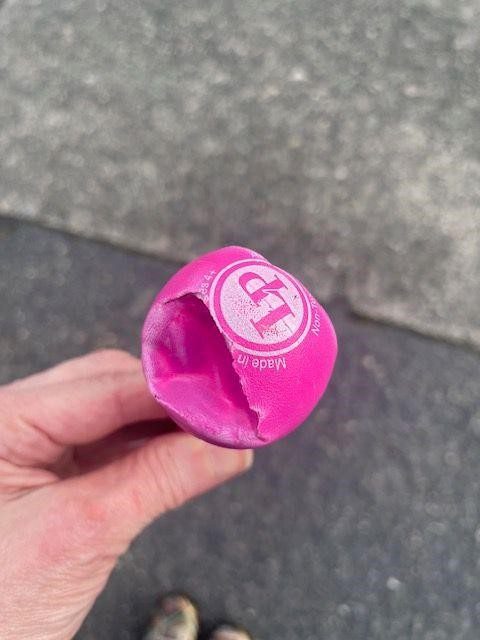
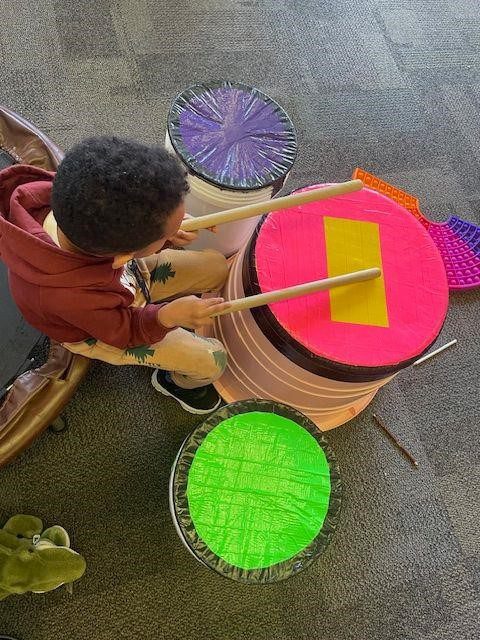
As a hyper-kinetic kid who was in time out, detention, or on the receiving end of corporal punishment during my elementary school years, I understand fully that disruptive behaviors are communications of unmet needs. For me, dance breaks and movement resets would’ve helped so much. Thus, these tools are in my kinetic, spatial teaching practices now.
In the ASPIRE and Distinct classes, communication challenges are magnified by the fact that the majority of the students are labeled non or partially verbal and/or speak a different language at home. Lowell is 80% students of color, with up to 7 languages spoken in a single classroom. The current administration is threatening to withhold federal dollars to schools like this, affecting funds for much needed teachers’ aides, counselors, and even the free meals needed by Lowell students. This place is a lifeline to 365 students and their families. The faculty, staff, and volunteers at Lowell are front line workers supporting so many beyond the walls of this school.
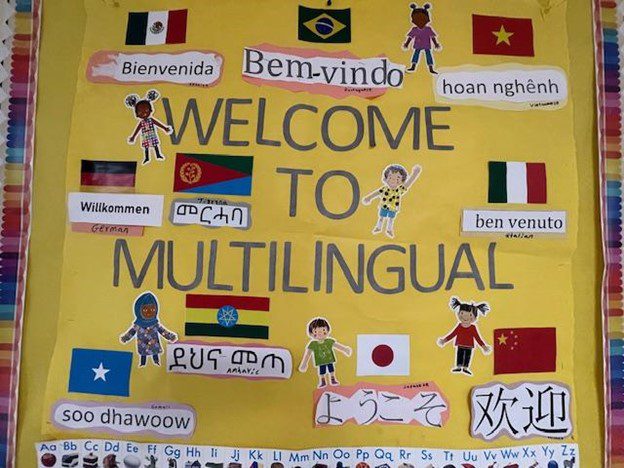
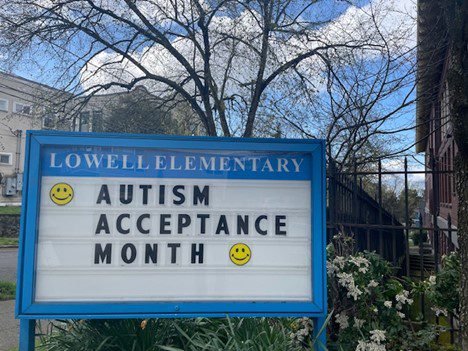
There is no one-size-fits-all lesson plan here. Each ASPIRE and Distinct student has an Individualized Education Plan with some crossovers, but in general, for the teachers it’s like having a group over for dinner and having to cook a different meal for each person, for the entire school day!
Shikataganai! It is what it is, so what’s the plan?
Last year my goal was to be all about the “YES!” with connection, affirmation of autonomy, and affirmation of capacity. This is inspired by the NeuroRelational Framework and the work of friend and mentor, Betty Peralta at Children in Bloom.
Here’s an example: Near the beginning of a class with percussion focus, one student came over and grabbed my wrist, wanting the bells in my hand. Shikataganai! The teachers ran toward us, shouting “NO!” I assured them I was okay. I turned to the student and said, “Wow, you are strong, you have such a strong grip! Squeeze my wrist again!” The student was jazzed to do so. “Can I squeeze yours?” The student was jazzed to receive a squeeze. We go back and forth a few times and then I offer some finger cymbals played by squeezing a handle. He squeezes/rings them. Then I ask the other students to clap when they hear the bell sound. The student is happy, engaged, and leading. Imagine the outcome if the response was “NO!”
This year, I brought the “yes” forward, and the following modeling strategies for engagement:
- Modeling 21st century skills: I focused on critical thinking, creativity, communication with an emphasis on collaboration. Sometimes it looked like failing in front of the group and then figuring out what worked better. Sometimes I asked for help from the students toward the goal.
- Modeling musical and movement “behavior”: Guest artist, improvisational actor, dancer, vocalist, Christian Swenson of Human Jazz joined to improvise and interact with the students.
- Modeling social emotional awareness: The Lowell Distinct and ASPIRE teachers already model this. They are experts at holding space for feelings, including big, spicy feelings without rushing, avoiding, shaming, or trying to shut them down, all while providing co-regulation for the student. In this way the students bring their whole self into the learning process. In general, I have found that it takes less time to tend to the feelings than to try to shut them down. Less battle and more Shikataganai.
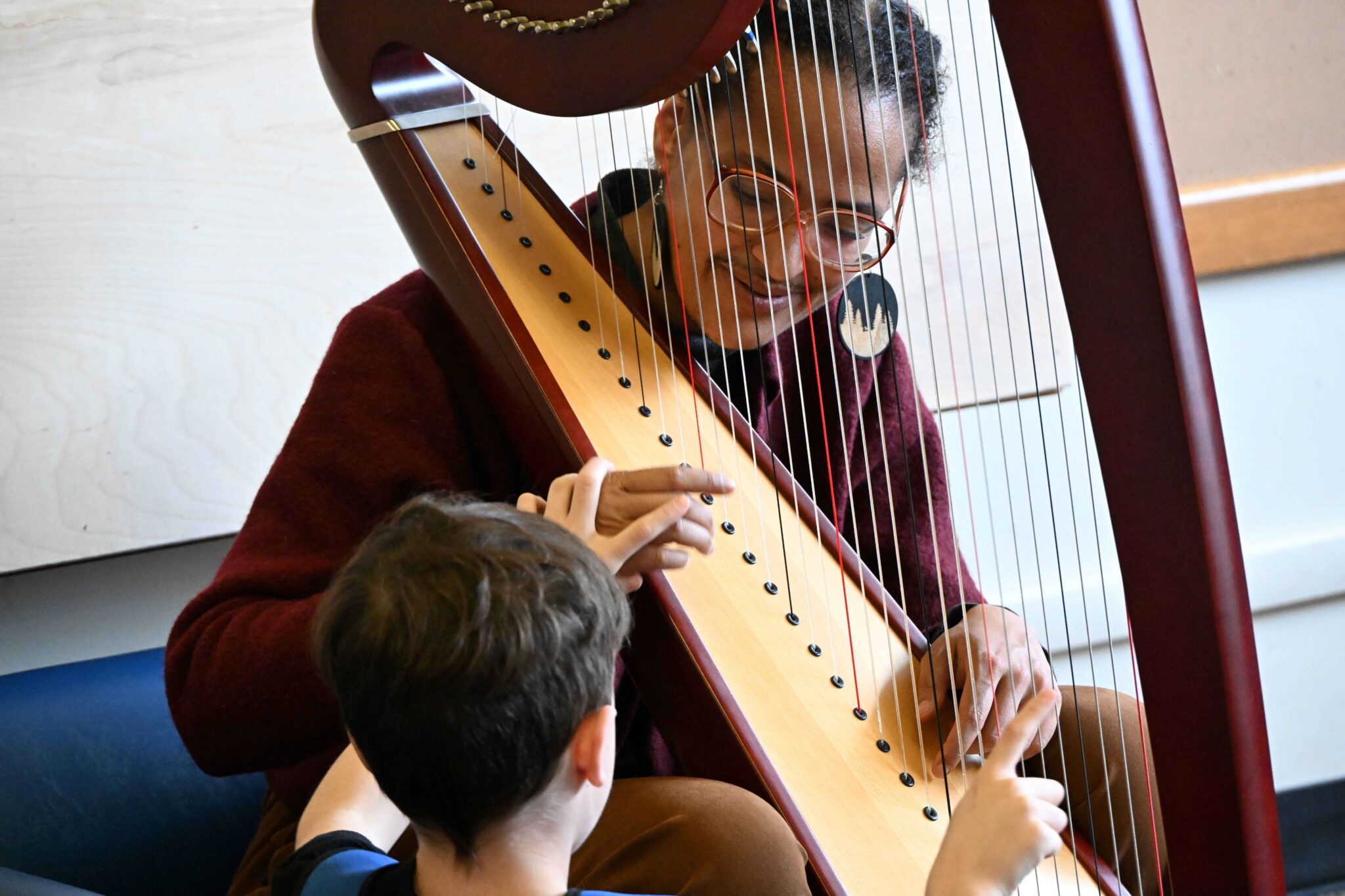
- Modeling excellence with representation: Alums of Lowell with lived experiences of neuro diversity or disability joined as guest artists, including Vanessa Stovall, classicist, harpist, and playwright, and Zoe Elan, singer and songwriter.
The student who bit the maraca is nonverbal, but I witnessed him singing “Let It Go” from Frozen. This is because many Autistic individuals have preserved or enhanced musical ability. Vocal stimming (singing, humming, and other vocal behaviors) can serve various functions, including self-regulation, sensory stimulation, communication, and expression of emotions. Music education is a crucial pathway of learning for this student’s success, just as movement education was for me.
The Distinct and ASPIRE faculty create a sanctuary of learning with these students who use rules other than the status quo and who nudge us toward innovations in education for all. This use of imagination and creative problem solving employs the same part of the brain in which we develop empathy. It leads to improved student engagement, motivation, and learning outcomes for all.
Listen to ASPIRE and Distinct students performing their original compositions created on Orbas and recorded by Jack Straw Audio Producer, Carlos Nieto.
About Jack Straw
For over 30 years, the multidisciplinary audio arts center Jack Straw Cultural Center has had a special commitment to serving youth with disabilities, English Language Learners, students from low-income families, and other underserved populations. Their creative technology programs are tailored to meet these students’ special needs.
As one of their many youth programs, Jack Straw has been collaborating with students and educators at Lowell Elementary since 2015. Their artist team provides an accessible and inclusive multidisciplinary arts integration project with Lowell Elementary School’s three 2nd grade classes and Kindergarten-3rd grade special education and medically fragile student classes. This program integrates poetry, movement, song, and technology activities into language arts and special education classes.
To learn more about these and other Jack Straw programs, email education@jackstraw.org.
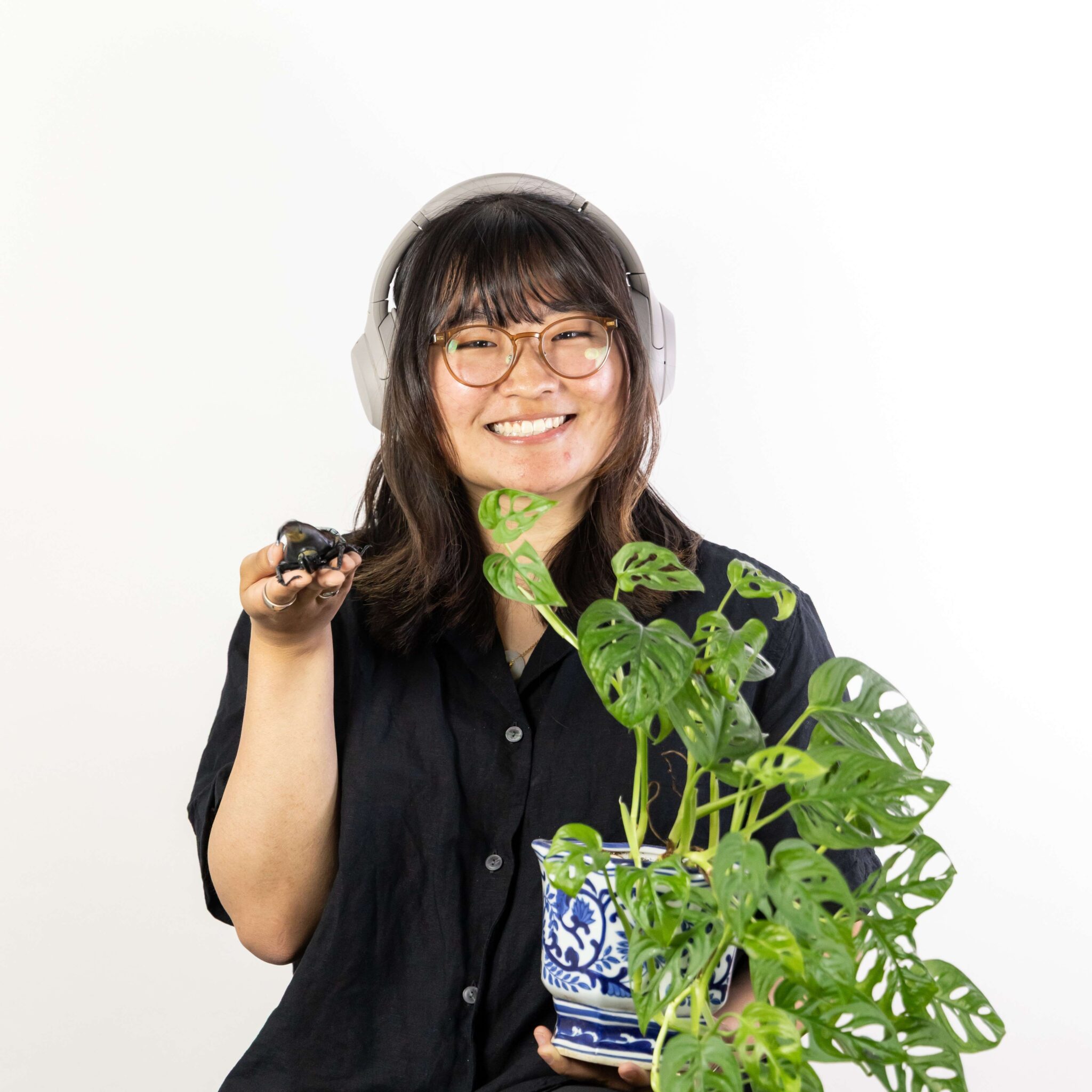
Leah Okamoto Mann is a multidisciplinary artist, event producer, and director of Kintsugi Somatic Arts.
This residency was made possible with funding from the Seattle Office of Arts & Culture and The Creative Advantage. You can find Jack Straw and Leah on the Community Arts Partner Roster.