 Photo by Jethro Gerbier
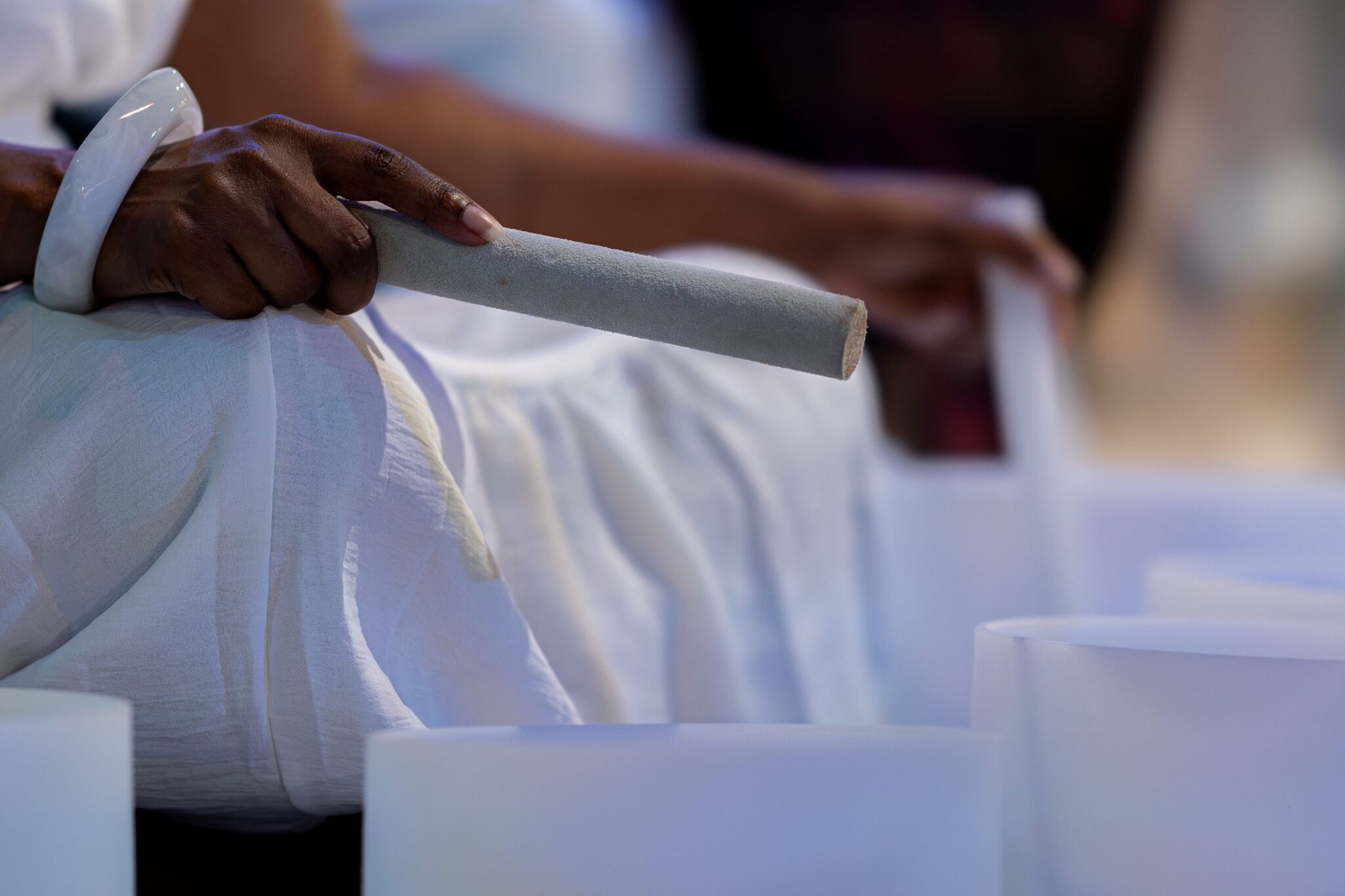
 Sound healing practitioners Stephanie Ann Ball and Tory Trujillo share a conversation discussing the origins, inspirations, and evolutions of their sound medicine journeys. Recipients of the Seattle Office of Arts & Culture’s We Still Dream a Future grant, they are offering sound bath experiences at ARTS at King Street Station throughout 2026. Read on to learn more!
We Still Dream a Future is a series of free public art activations, installations, exhibitions, performances, and learning experiences designed to help us dream, learn, and grow, taking place throughout the Downtown core. View our events calendar for more information.
What is your focus for the We Still Dream a Future grant?
Tory: My focus is based on my belief that rest is our birth right. I’m starkly aware of how the over-culture thinks of the human being as an object of production, valued based on what we can produce at a pace that is not sustainable. It’s not the way our ancestors existed. Our ancestors were aligned in relationship with the earth and the seasons, which included cycles of deep rest. We’ve been removed from that. In this current state of late-stage capitalism, I understand that rest is resistance.
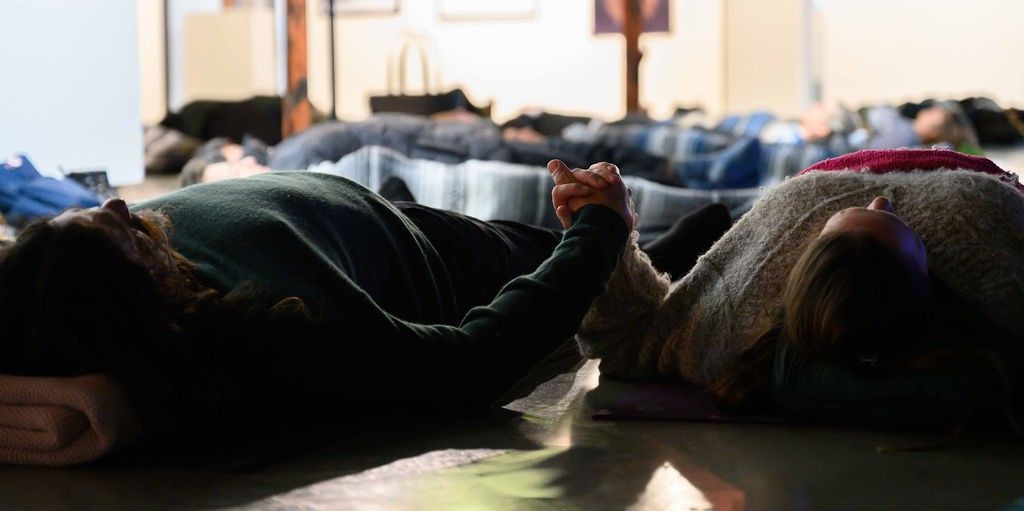
I asked myself “how can I create opportunities where people are invited and given permission to rest?” For people to able to receive, release, replenish, and reset not just so we can be more productive, but so we can dream a better future. From the scientific perspective, we know that when our parasympathetic nervous system is activated, all of our bodily functions work more effectively. It also gives us more access to creativity. We can dream and create a better future if we aren’t tapped out.
Stephanie: I drew my inspiration from two sources: my sense that collectively, people were in great need of deep, restorative rest for the soul, and noticing that people were craving deep restorative rest for the body, yet struggling to slow down and receive it. It’s much more difficult to dream about a brighter tomorrow when we’re not well-rested, as a lack of sleep can negatively affect our body’s internal processes.
Since we have excellent research on how critical sleep is for overall wellbeing and how supportive sound and music can be in enhancing sleep quality, I thought I’d propose a concert series that checked both boxes. The decision to add a little fun by incorporating bedtime stories and lullabies for adults came after meditating on ways to help foster greater safety around the concept of stopping to rest. When we’re more rested, we have increased access to creativity and more capacity to bring good into the world. I wanted The Dreaming Room to be a place where people could come and rest from the noise of the outside world.
What does sound medicine mean to you?
Stephanie: Personally, I believe that sound medicine can be anything that restores you back to balance and inner peace. There’s this great piece by contemporary classical composer John Cage titled 4’33” that illustrates the meaning found in everyday sounds. Essentially, the soloist enters the stage, opens the music, and sits there for the duration. The music becomes the creaking of the piano bench, the rustling of the audience, the hum of the air conditioner, etc. I believe that everything can have a healing effect when listened to with intention.
When you consider that every culture has used music to connect, celebrate, mourn, and express emotions, it seems so obvious to me that music is medicine. It’s a necessity for all humans to heal and thrive, not a luxury to be enjoyed by only a few.
Tory: It is a way to release, connect to what is meaningful, and to heal through sound. It can be sound we make with our own bodies or external instruments. It can be sounds from nature or music. It can be what we create alone or in community. But it is any frequency that brings us a sense of stillness and wellness. To me it is both sacred and mundane.
What has been your favorite part of the We Still Dream a Future grant so far?
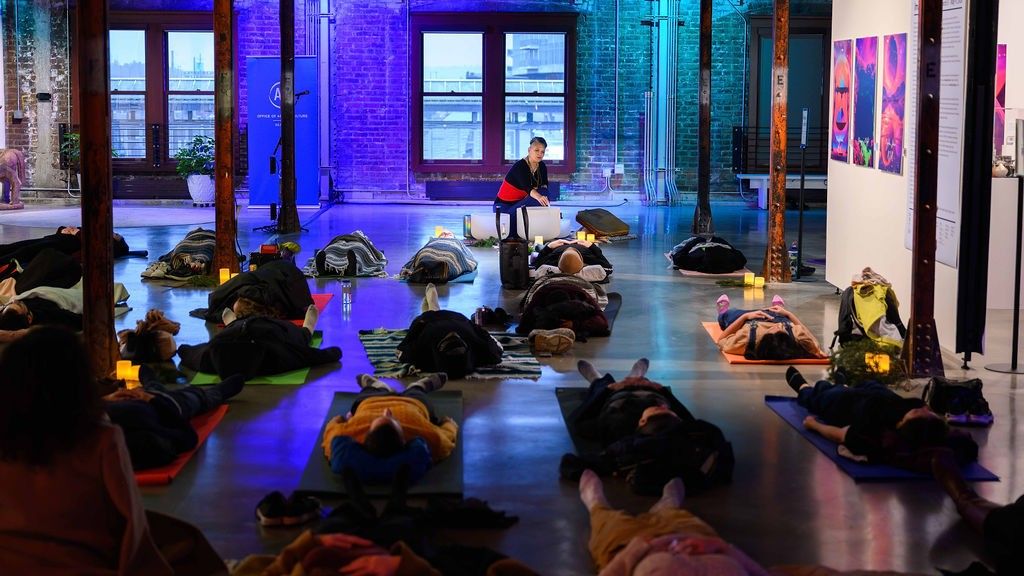
Stephanie: It’s been so much fun to see people come into the room and enjoy an opportunity to rest and tap into a little bit of childlike wonder again. It’s also stretched me as an event producer and as a musician to learn about more aspects of production, working with a larger team, and getting set up in a stunning space that looks different each time.
I’ve also loved getting to know the other grantees and artists in the city. Whenever we get to ARTS at King Street Station and say, “Ok, let’s set the stage here, and put this here, and oh my gosh, look at this gorgeous painting! Who did this?” it’s such fun. Connecting with the work of others while I have this incredible opportunity to expand my gifts as a healing artist has been extraordinary, and I’m deeply grateful.
Tory: I resonate with Stephanie’s favorite’s list. In addition, I love being able to share resources with other cultural producers and artists. One outcome of that for me is being able to have beautiful professional photography and filmography of my events, which also highlight the beauty of the gallery space.
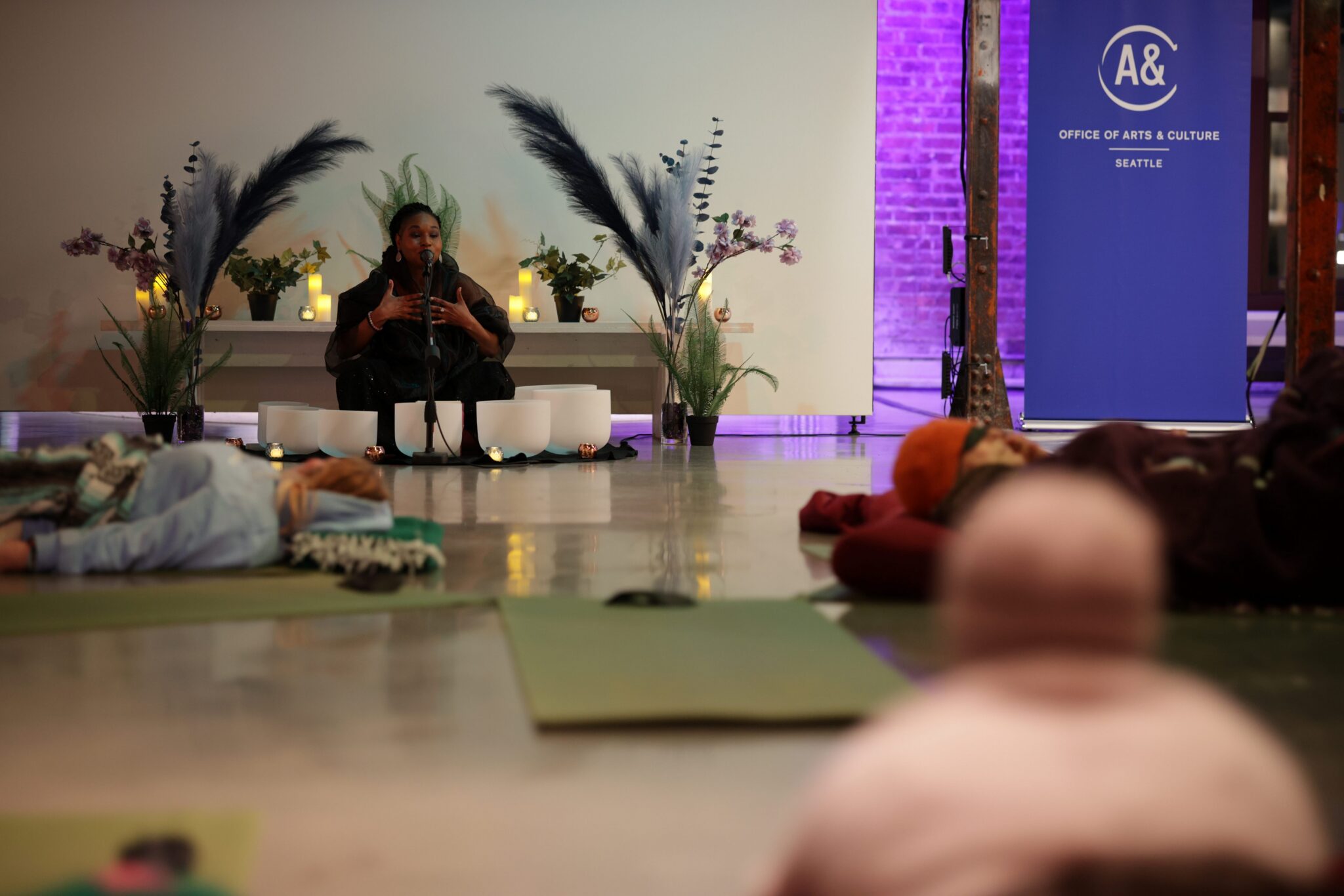
I also love that these events are free, meaning that there isn’t a financial barrier for participants. I observe how much people come needing these moments of rest, care and healing. I then witness participants’ bodies relax, sometimes tears flow, and they are able to leave lighter. It’s so meaningful to me, especially now.
What is your musical journey, including your background, inspiration, and evolution?
Tory: My musical journey isn’t linear, but organic. I was initiated into singing through gospel music, singing in the Pentecostal church. It didn’t come with structured training, but it did train my ear and my spirit to listen and follow. I started singing solos at a young age and very much enjoyed it because of how I felt as sound was moving through me. It helped me express truth I couldn’t in my daily life. People began sharing that they felt moved to tears or experienced healing by listening. That’s how I began to understand sound as medicine.
I also believe I draw from ancestral knowledge. There were likely healers in my Mexican Indigenous lineage that worked specifically with sound because so much of it feels like I’m remembering. Over time I’ve learned to let go and let sound move through me intuitively.
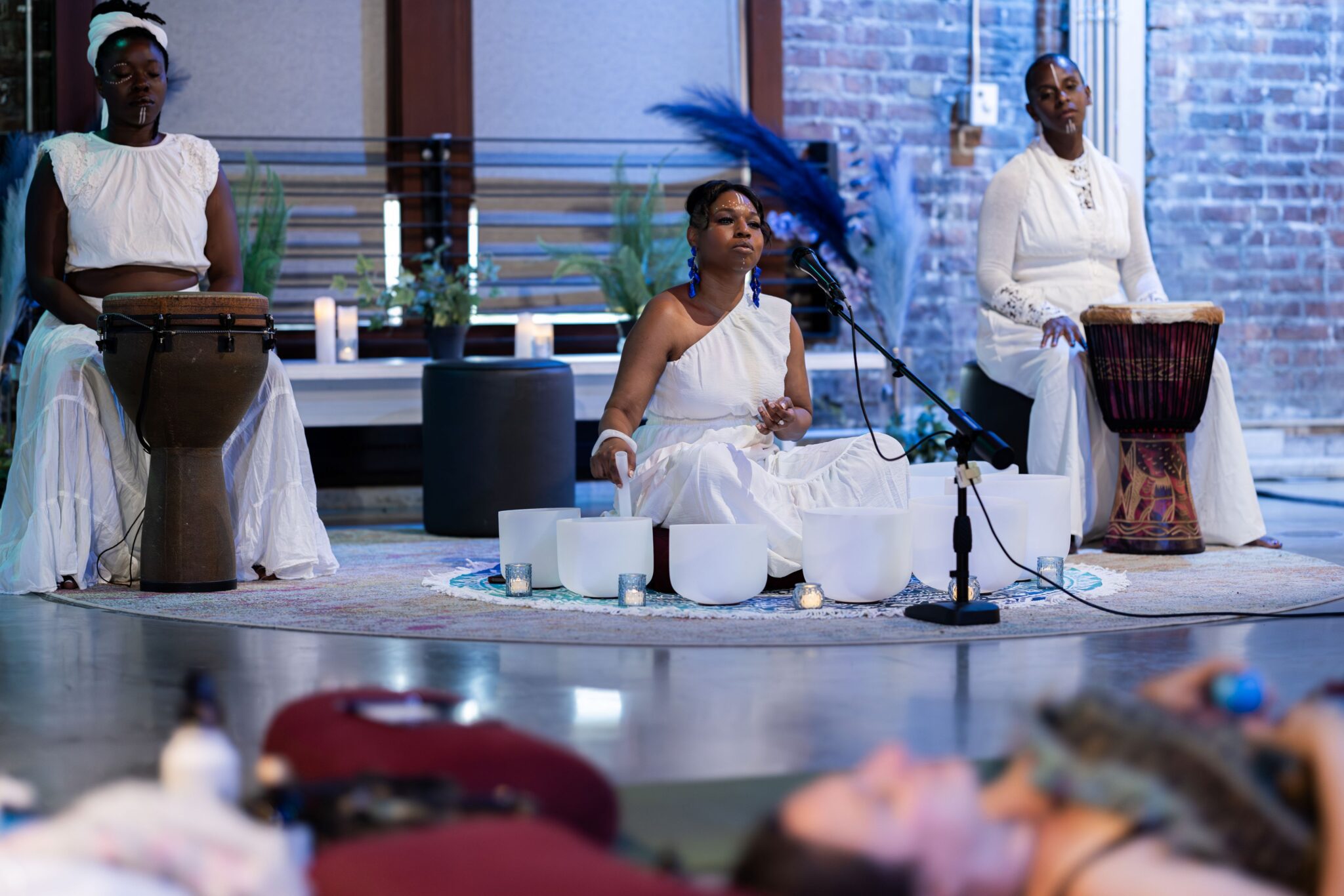
In the early 90s, I fell in love with quartz crystal singing bowls. Since the first time I played, they made my whole being sigh. I began to offer group sound meditations in 2010 when I lived in Michigan. But sound baths, as they’re called now, hadn’t yet caught momentum there. It wasn’t until I moved to Seattle in 2020 that I was invited to offer sound baths more. I think it was a combination of the existing culture of sound medicine on the west coast and the uncertainty of the pandemic and social, political, and environmental happenings.
I feel like I stepped onto fertile ground here in Seattle in regard to sound medicine. Thankfully, the arts are incredibly supported here. I’ve been able to offer sessions through varying avenues: family gatherings, festivals, art exhibits, and workplaces. Now, I am supported by the Seattle Office of Arts & Culture to offer sound medicine to the community at ARTS at King Street Station. I feel very fortunate.
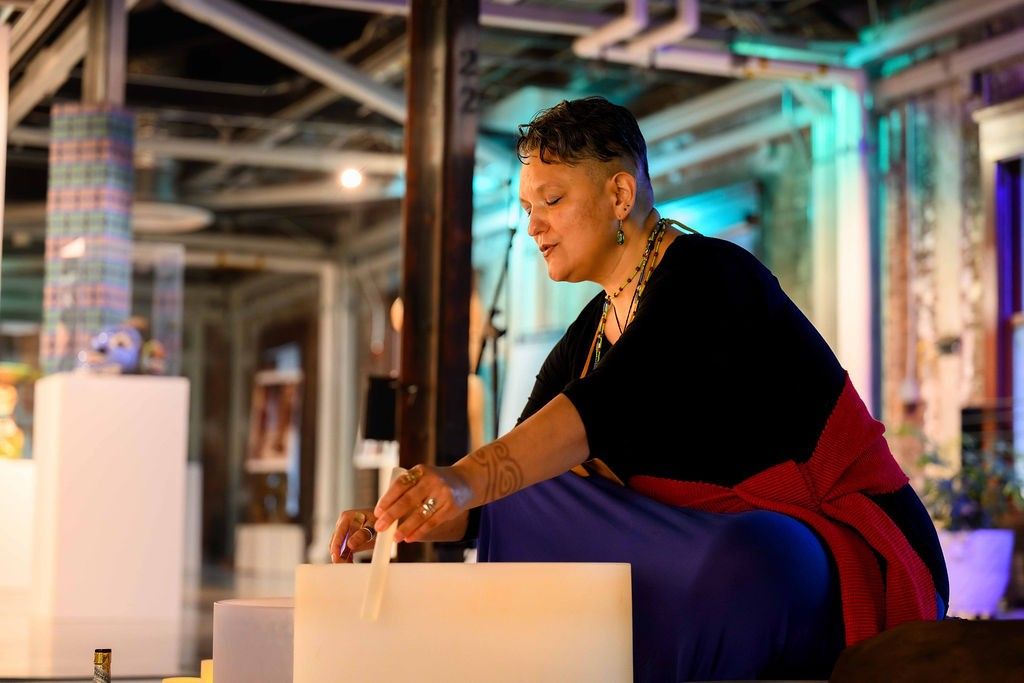
Stephanie: I grew up in a deeply musical family; my father was a drummer, and many members of my mother’s side are proficient gospel singers. I began piano lessons and singing in children’s choir at age 4. When I was 8, I took up the violin and fell in love with classical music and orchestras. My love for the stage solidified when I began performing in musicals as a teenager.
I embarked on the pathway of opera when I was gifted a CD of Barbara Hendricks by my voice teacher, and it was over from there. I thought, “If my voice is capable of creating sound that powerful, then that’s what I want to do.” That led to classical bel canto training, a college scholarship in Vocal Performance, and a Master’s Degree in Music. I’ve been a voice teacher for over 20 years, believing singing is one of the greatest things you can do for yourself, so helping others get in touch with their voices is a special part of my work.
Like Tory, my path is also quite non-linear. After graduate school, a new teacher entirely reframed singing for me. I will never forget the moment Carol Kirkpatrick said to me, “This is not about you. Singing is about you becoming the vessel so you can deliver the healing to the audience through your voice.” It set me on the path of being a steward of sound as medicine, rather than sound as entertainment.
When theaters shut down in 2020, I thought surely there’s something that I could be doing to help support people right now. I’d been listening to sound baths to manage a lot of grief and anxiety in my own life, and at some point, something just clicked. I realized that I’ve been healing with sound all along through a different art form. Immediately, I found a sound healing certification focused on the science of sound and how it interacts with the body, and I studied with energy healers to ensure I could facilitate with care, safety, and integrity. Seattle has welcomed me so warmly, and I feel deeply grateful for it.
How has your experience been working with the Office of Arts & Culture?
Tory: Working with Rana and all of the support staff from the Seattle Office of Arts & Culture has been amazing! I have felt that they’ll support anything I can dream of within their capacity. Their support has helped me feel able to say “yes” and stretch me into a growth point. They have helped facilitate the process all along the way from concept development to paperwork. Again, I feel so thankful and look forward to my last four sessions toward the end of this year!
Stephanie: Yes! I agree, Rana has been such a gift I can’t imagine doing something like this without having a touchpoint in the Office. That would have been a totally different experience. Seattle has such a rich artistic culture, and knowing that the Office of Arts & Culture is here to support it all has made this an incredible year.
About the Artists
Tory Trujillo is a Michigan native, Mixed Blood, Two-Spirit, Facilitator of Healing, Professional Vocalist, and the Artistic Director of Voices Rising LGBTQ of Color Arts & Culture. Her Mexican Indigenous heritage informs her work as a Sound Medicine Practitioner which has evolved over the last 16 years. She was a 2023 recipient of Uptown Storefront Activation Grant funded by the Seattle Office of Arts and Culture, facilitated group Sound Healing Experiences for the Goddard MFA Residency in 2024, and is a 2025 Recipient of the Seattle Office of Arts & Culture Grant “We Still Dream a Future”.
Stephanie Ann Ball is a Classical Soprano, Healing Artist, and Executive Presence Consultant who creates immersive sound experiences at the intersection of music, storytelling, and wellbeing. Her work has been featured in Harvard’s Deep Rest initiatives, and she has performed with opera companies and orchestras nationwide. Through her recorded music, concerts, workshops, and sound meditation experiences, Stephanie helps audiences and leaders access clearer focus, authentic expression, bolder creativity, and deeper connection. As a 2025 Grantee of the “We Still Dream a Future” funding initiative, she is presenting a healing concert series focused on deeper sleep with the support of the Seattle Office of Arts & Culture.